

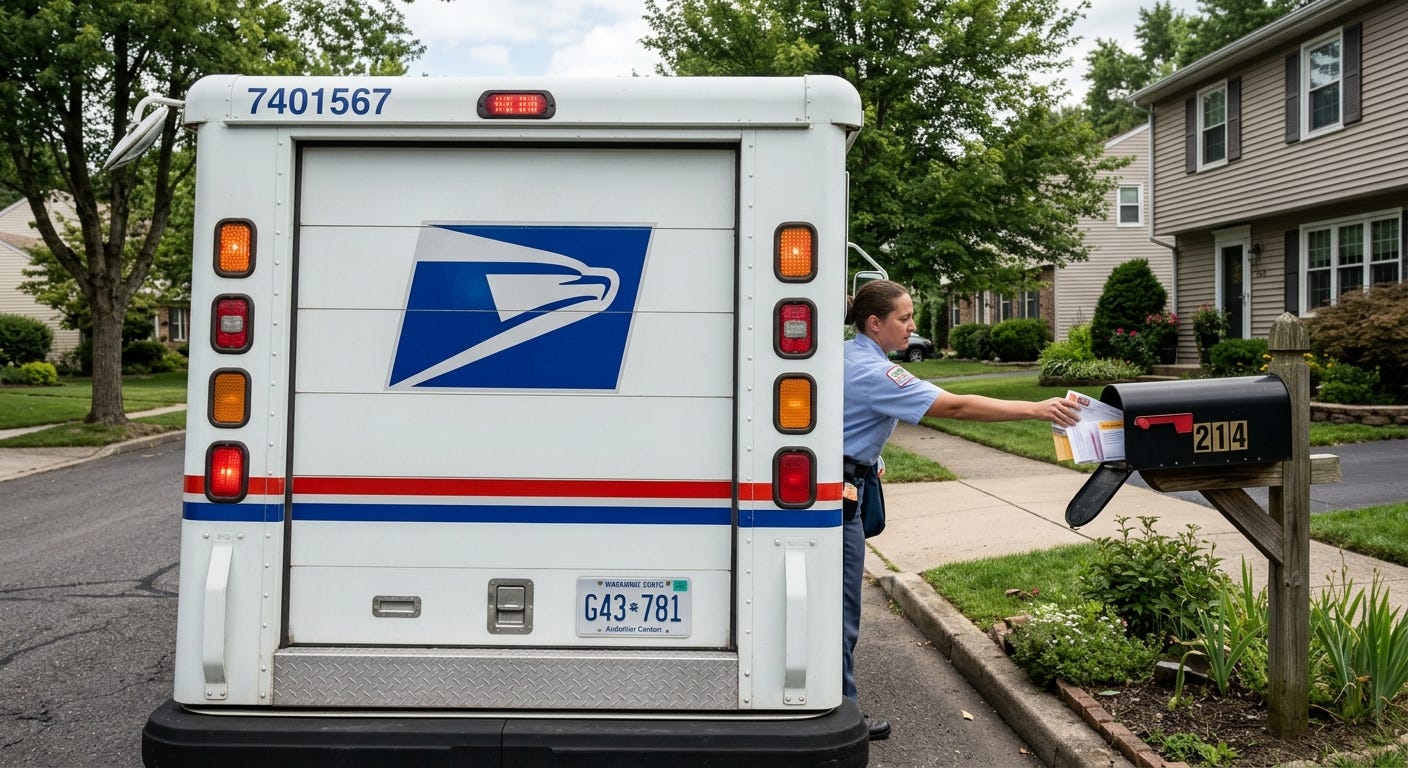
Financial institutions, banks, insurance companies, tax offices - they all end up sending physical mail at some point, no matter how diligent you are about signing up for so-called “paperless” delivery. You’ll never be 100% free of legitimate First Class mail so how do you ensure you don’t miss important documents that might not be available online or via email?
Why you need to think it through
A mailing address is not just a physical location where you receive mail. It can be the legal residence where you have established domicile (more on that later), where you are registered to vote, determine health/automobile insurance rates, and more. In addition, many entities legally require a physical mailing address.
Banks and other financial institutions
Drivers license renewal and vehicle registration
Health insurance and Medicare (if applicable)
Federal/state/county/city correspondence
Passport/visa renewal and government ID
Get your mail figured out many months before departing
Believe me when I say that you do NOT want to wait until the last minute to set up mail forwarding/handling. Here’s what we did. About 4 months before departing I started keeping track of how much FIRST CLASS mail we received and from whom. You can do this using a simple notepad, your phone or a spreadsheet. Keep track of this for a few months and you’ll have a good sense of how many letters you receive monthly. This will help you determine which level of virtual mailbox service you need.
About 3 months before we departed Austin, I selected a virtual mail provider and started changing all of our addresses with banks, financial institutions, insurance companies etc. Many institutions will allow you to provide your physical address (what you are claiming as your domicile) and - importantly - a mailing address.
Choosing a virtual mail service provider
We do not get paid to recommend any of these companies but these are the ones most often used by full time travelers and nomads (listed in alpha order not by preference or popularity). Most are in the $10-$20 per month range for basic needs.
There are many other providers options so do some research. Here are some things to consider as you evaluate your options:
How many monthly envelope content scans are included in your desired plan? Additional scan charges can add up quickly.
Does your preferred location open and scan mail or forward all mail to a centralized location to do this? Some companies that advertise thousands of locations rely on partners that simply accept mail but do not process it. This can delay getting your mail by up to a week.
Is the online web and app interface clear and easy to use?
Does the company offer check deposits? Many do not. (We did not care about this and would simply forward the envelope to someone else if a check was received)
Does the company charge extra to shred your mail? Another money maker. (FYI one company admitted to me that they have a service that shreds all mail anyway so the question really is: How does your company dispose of mail?)
What is the cost to accept and store packages?
What is the cost to forward envelopes and packages?
Recommended order of operations
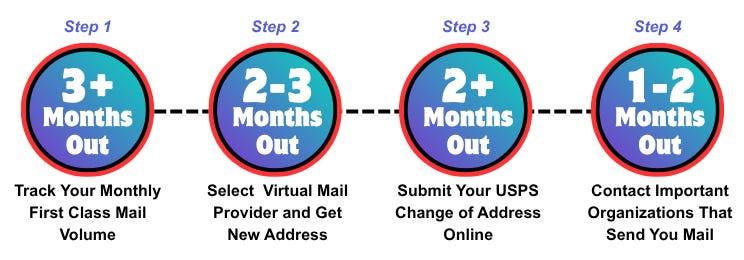
Step 1: Track your First Class Mail
Do this for a month or so and you’ll get a good sense of how much First Class mail you receive. Take note of how many of those letters you could also view online vs those whose content remains a mystery and need to be opened. Armed with this information, you’ll have a much better sense of which virtual mail service plan best fits your needs.
Step 2: Select a virtual mailbox service
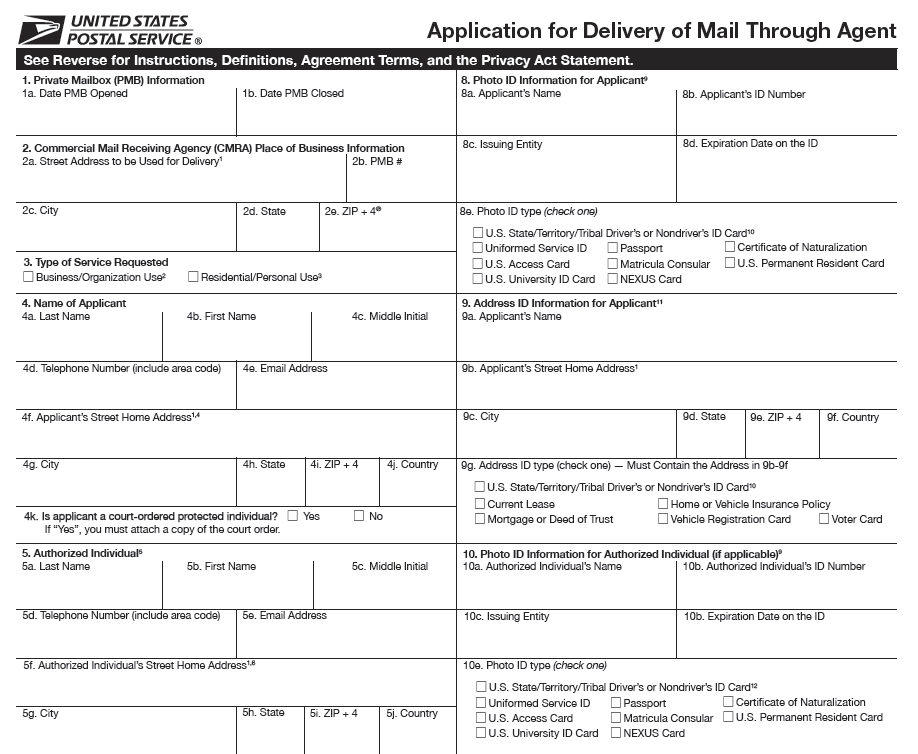
There are MANY ”commercial mail-receiving agencies” that offer virtual mailbox services. We chose PostScan Mail. One important step here is completion of USPS Form 1583 (Application for Delivery of Mail Through Agent). With this form, you are authorizing the virtual mail service provider to accept mail on your behalf. This form must be notarized!
Step 3: Complete USPS Change of Address
The USPS “Change of Address” service is a little deceiving because you cannot count on the USPS to do the tedious work of notifying all of your institutions of your new address. Instead, they will forward your mail to a new address for 12 months (extendable up to an additional 18 months) and during that time you are expected to notify companies of your new address.
When selecting when to make the service active, start it right away and not the day you plan to depart. It takes a few weeks for it to start working. For this reason, we recommend setting up your virtual address and starting USPS mail forwarding months in advance of departing. One less thing to check off your list just before departing!
If you have a sharp eye, you may have noticed that some companies print “Address Service Requested” on First Class envelopes. This service allows companies to be notified by USPS if the recipient has changed their address. Ironically, as a safety precaution, those companies will usually send a followup letter to your old address confirming the change.
Step 4: Contacting important institutions
As much as you might think the US Postal Service will forward every single first class letter you receive, they won’t. Nor will it be quick. It took months for most of our first class mail to reliably be forwarded to our virtual mail service address and even today some inexplicably slip through. This is why you want to start the transition months in advance. As a bonus, your junk mail will not be forwarded!
What about packages and PO Boxes?
Most virtual mail services accept packages from Amazon, USPS, FedEx, UPS, etc. This is important. Why? Let’s say you are traveling overseas and one of your credit cards gets lost, hacked or stolen. Your credit card company will only send a replacement card to a legal street address, not a PO Box. If you elect to get a USPS PO Box, make sure you also select a post office location that offers USPS Premium PO Box Street Addressing service. This service allows you to have an address such as 123 Main Street #456, Austin, TX 78701 rather than PO Box 456, Austin, TX 78701. It’s free with your mailbox rental but you must complete this form when you sign up for your PO Box. Keep in mind that this address cannot be used as your legal residence on legal documents. Again, virtual mailbox providers also provide a street address and far more additional services than USPS so we don’t recommend the USPS option for most full time travelers.
Using a Friend or Family address
Some full time nomads have asked a very close friend or family member to use their address for mail. While this can save a modest amount of money each month, I don’t recommend doing so unless your mail volume is extremely low.
Asking a family member to text you when mail has been received gets old (for them) very quickly. You will be asking them to open envelopes, take photos of contents, and text you the images. If they are willing to do that, then it may work for you. The bigger question is: Do you really want them reading your end-of-year tax documents and results of your colonoscopy? And are they going to toss sensitive documents containing your social security number in their recycling bin or shred them?
Will you be selling (or stop renting) your current residence?
As you consider how to handle your mail you want to keep in mind the issue of domicile, especially if you are selling your home. For example, if you decide to sell your house (or move out of your rental) to travel full time, you will no longer be “domiciled” in that state unless you take action to maintain it.
Domicile is a big deal because it is tied to US state taxes, your eligibility to vote and which courts have jurisdiction over issues such as probate or jury summons. You may only have one domicile at a time. Fortunately, states like Texas, Florida and South Dakota have more lenient residency requirements, no income tax and a robust ecosystem built around full time RVers and nomadic world travelers. This is why most full time nomads choose one of these states to establish domicile. If you were already domiciled in one of the six other states that do not have a state income tax, it may not be worth it to you to switch. Many full time travelers recommend Escapees for domicile and mail handling services (see above).
If you intend to sell your home, a simple virtual mail service may not be adequate to meet legal requirements. Some states - including California and New York - have been known to aggressively audit claimed domicile changes. Regardless of your situation ask a tax professional about any proposed changes in your domicile state, especially if you plan to keep your home and/or rent it.
Like we said, you’ve (still) got mail
Diligent as you may be, you’ll never be completely rid of physical mail but if you plan accordingly, and methodically change your address with senders, you’ll never find out too late that you missed a medical, insurance or tax bill. Happy travels!
Are you a full time traveler? How do you handle mail? Share your experience and insights with others.