


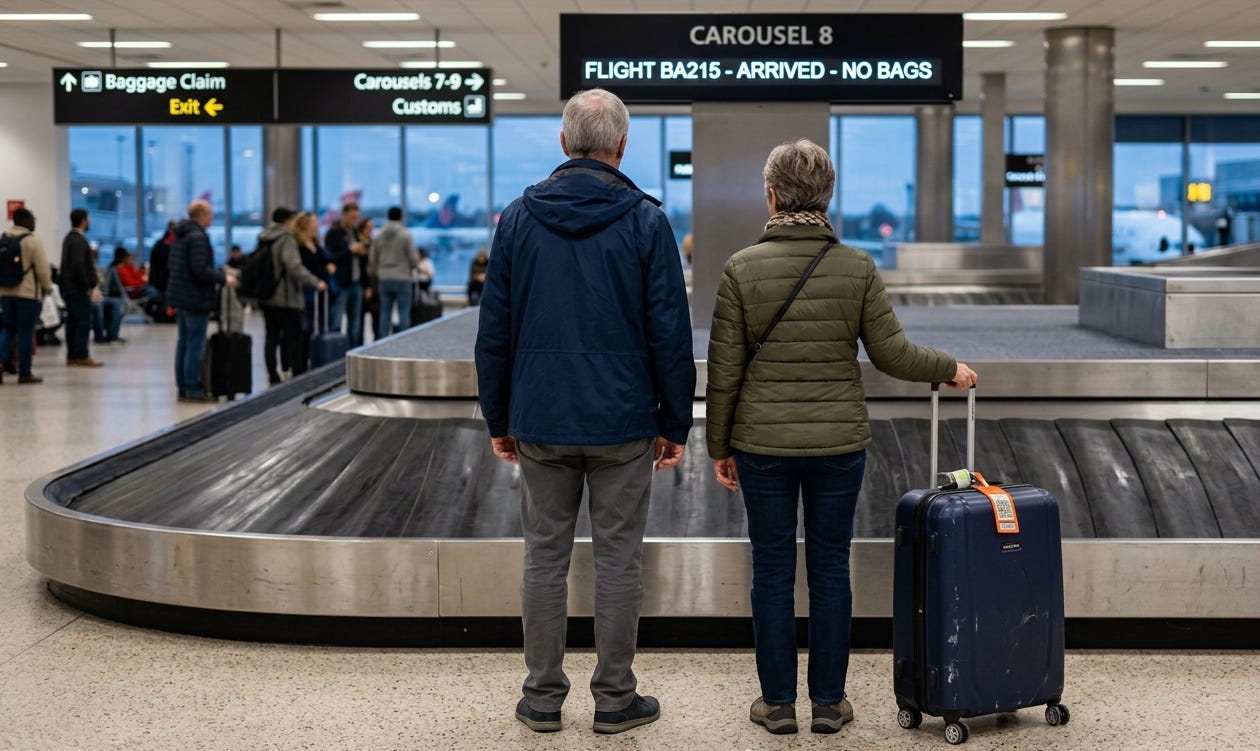
As many experienced travelers will tell you, there is a lot to be said for carrying your bag onto every flight. It saves time. It saves money. And it eliminates the possibility of your bag getting lost or delayed.
But let’s be real - carry on is not practical for every traveler or every airline. And despite the best efforts of airlines worldwide, some bags go astray.
What percentage of checked bags get “mishandled” by airlines?
While you may hear the occasional social media horror story about an airline losing someone’s bag, it’s actually far less common than you might think. According to a 2026 baggage insights study commissioned by SITA, the likelihood that your bag will be mishandled (delayed, damaged or lost) is less than 1%. In 2025, the odds that your checked bag was mishandled on a:
Domestic fight: <0.2% (1.65 out of every 1,000 bags)
International fight: >0.9% (9.12 out of every 1,000 bags)
The Air Travel Consumer Report published by the US Office of Aviation Consumer Protection in July 2026 puts the percentage of domestic (US only) mishandled bags by US carriers at 0.42%. Why are bags far more likely to get mishandled on international flights? Simple. International flights involve more transfers and tighter connections.
Either way, the odds of your bag getting delayed or lost are pretty low, and varies by airport and airline. Of those “mishandled” bags, a tiny fraction are truly lost according to SITA research:
Delayed: 75% of mishandled bags
Damaged: 21% of mishandled bags
Lost: 4% of mishandled bags
These percentages have dropped significantly over the last 20 years due to better airline tracking technology, baggage sorting/transfer systems and adoption of consumer tracking devices (Airtags, etc.).

*Based on 2026 research data from SITA.
What if YOU are among the unlucky?
Ok, the odds are small but let’s imagine you are that annoyed and confused person hopefully staring at the rotating luggage carousel, your bag nowhere to be seen. What do you do?
Step 1: Make your way to the airline Baggage Service Office (BSO) or airline desk and file a Property Irregularity Report (PIR in airline lingo). You’ll receive a tracking code. Do this within 4 hours of arrival. If you received a checked baggage receipt, keep it.
Step 2: Get actual receipts (not credit card statements) of your expenses after you leave the airport. Depending on how long your bag is delayed, the airline may reimburse you for:
Essential clothing (a few outfits) while you wait
Toiletries
Medications or medical supplies
Laptop/phone chargers (but probably not a new laptop or camera!)
Keep in mind that if the loss occurs on your return trip home, the airline will probably reject the expenses noted above because you will have all these things at home. If your bag ends up being lost, that’s a different story.
When is your bag considered lost?
The Montreal Convention is an international treaty that covers international air travel. It has been adopted by the vast majority of countries you would ever visit. This treaty says that a bag is considered “lost” if it has not been located within 21 days (or sooner if the airline has formally admitted it is lost). After that you are entitled to file a claim for the value of the bag and contents.
According to the Montreal Convention, you are entitled up to 1,519 Special Drawing Rights (SDR) which convert as follows at the time of writing in August 2026. The amount fluctuates daily.
USD = $2,110
Euro - €1,860
UK Pound = £1,600
The limits above are for international flights. The US, for example, has higher maximum limits for domestic flights.
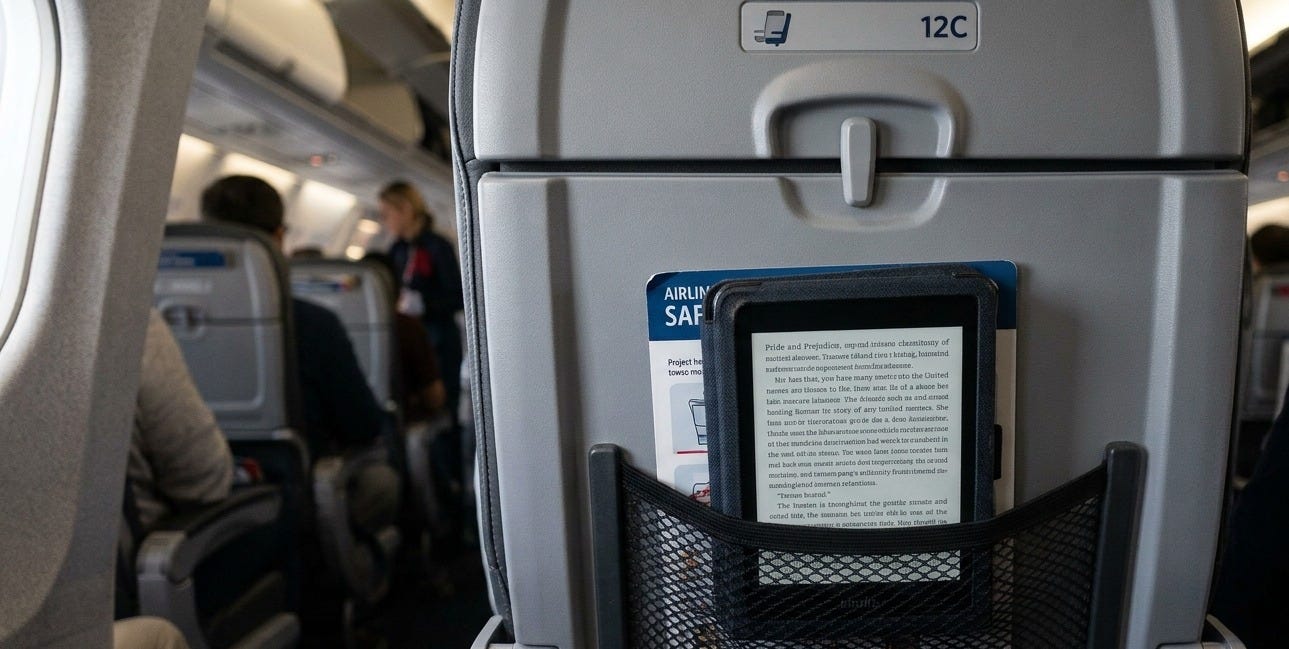
If you leave your Kindle or iPad in the seat back pocket, that’s on you and not considered a “lost” item. Sadly, I did this… :-(
The good news and the bad news
Ok so it’s been 21+ days and the airline has no clue where your bag is. It’s officially deemed lost. Despite the fact that you already filed a PIR, you’ll need to file a loss claim with the airline. Let’s say the total new cost of the contents in your bag (including the bag) is $2,500.
40L wheeled backpack - $400
2 pairs of travel pants: $75 each
3 pairs of shorts/dresses: $50 each
6 Merino shirts: $75 each
3 other shirts: $50 each
Undergarments (various): $200
6 pairs of Merino socks: $25 each
Rain jacket shell: $200
Long sleeve pullover: $100
Hiking sandals: $150
Toiletries/accessories: $150
Other travel accessories: $250
The good news is that you’ll have brand new stuff. The bad news is that the airline is NOT going to pay 100% of the replacement cost of your stuff. In our example above, the airline will depreciate clothing using a proprietary formula. So, your $2,500 loss might only net a $1,500 payment from the airline depending on age and condition of the items. According to the SITA study, the average compensation paid out by airlines for a lost bag is $425.
What is not covered
There is an important difference here. Airlines set their own exclusions for items they will not cover for checked bags on domestic flights. This generally includes:
Laptops and tablets
Cameras, lenses, drones
Fine jewelry and watches
Collectibles and artwork
And other items
However, Article 17 of the Montreal Convention does not allow for exclusions. So, if flying internationally, yes, you could theoretically be reimbursed for that laptop, Rolex watch or $1,000 in cash (up to the limits) you stashed in your checked bag. But we also know you’re not that careless. If it’s valuable, keep it in your carry on bag.
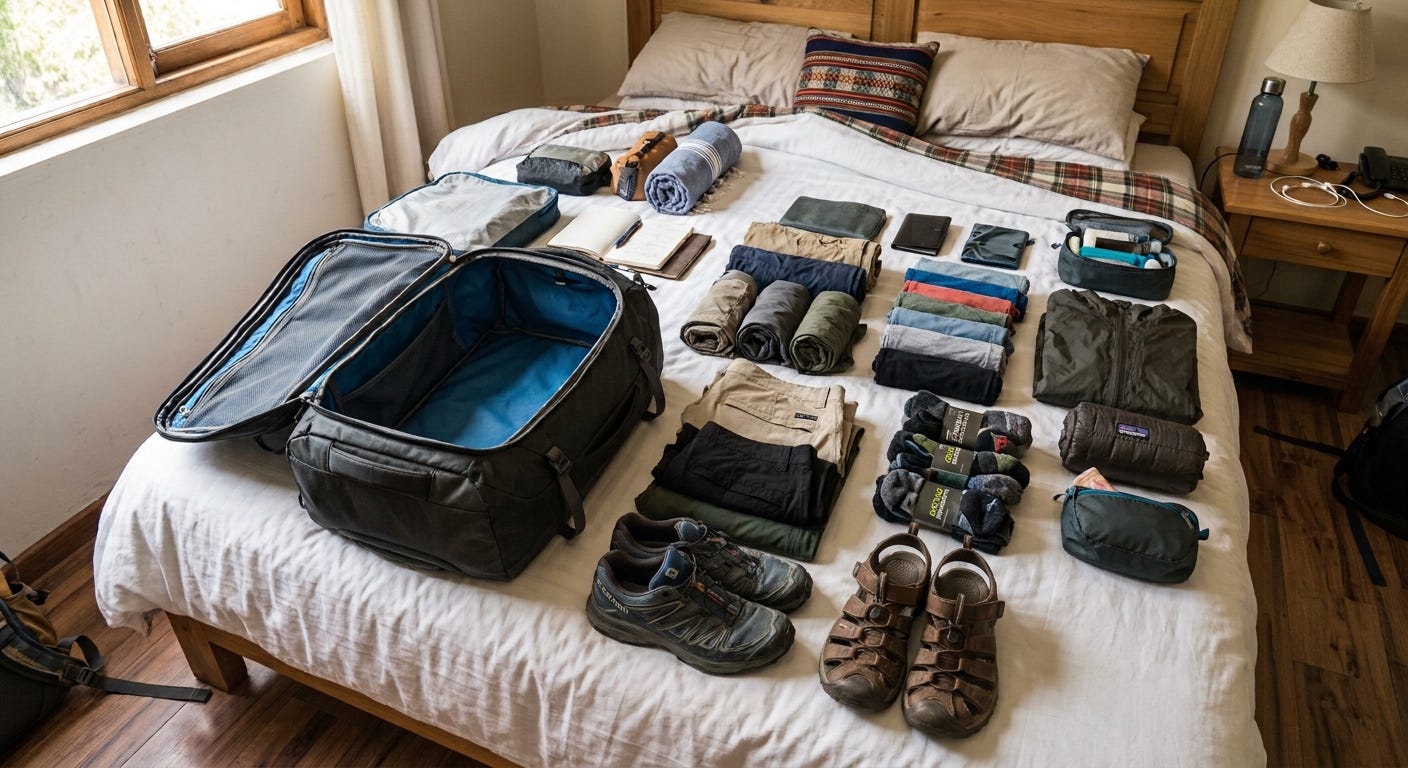
Pro Tip: Before you pack your bag (if checking it), lay all contents out on a bed and take a photo of it. If expensive clothing, take a photo of each piece inclusive of its brand label. Save digital receipts of pricier items for future reference.
Will my credit card make up the difference?
Probably not much. Numerous travel-focused credit cards like the Capital One Venture X and Chase Sapphire cards advertise Lost Luggage Reimbursement protection. The problem is that the coverage is secondary coverage and they use Actual Cash Value to calculate the payout much like the airlines.
Using the earlier example, your bag and contents cost you $2,500 new. The payment from the airline was $1,500. Yes you can submit a claim to your credit card to see if they will pay some or all of the difference but don’t expect a $1,000 check. Nonetheless it’s worth a shot to see if you get some additional payout. You’ll need to show proof that you filed a claim with the airline and their settlement/denial letter (plus all receipts) before the credit card will consider your claim. Oh, and if you did not pay for your ticket using that credit card, you’re outta luck.
Bluetooth trackers: the best baggage insurance you can buy
If you use AirTags or another Bluetooth tracker, and you see that your bag is at another airport, you can help speed the process of retrieving your bag by doing the following:
Open the “Find My” (iPhone or Mac) or “Find Hub” (Android) app on your phone
Select the tracking device that’s in your lost bag
Copy the link and share the item location when submitting the Property Irregularity Report with the airline
Sharing this information can dramatically increase the odds of getting your bag back sooner!
Has an airline ever lost or damaged your bag? What happened next? Share your experience with others.

Hope I will never need the information- but who knows. Thank you